Stock Fails on Temperature, Not on Time
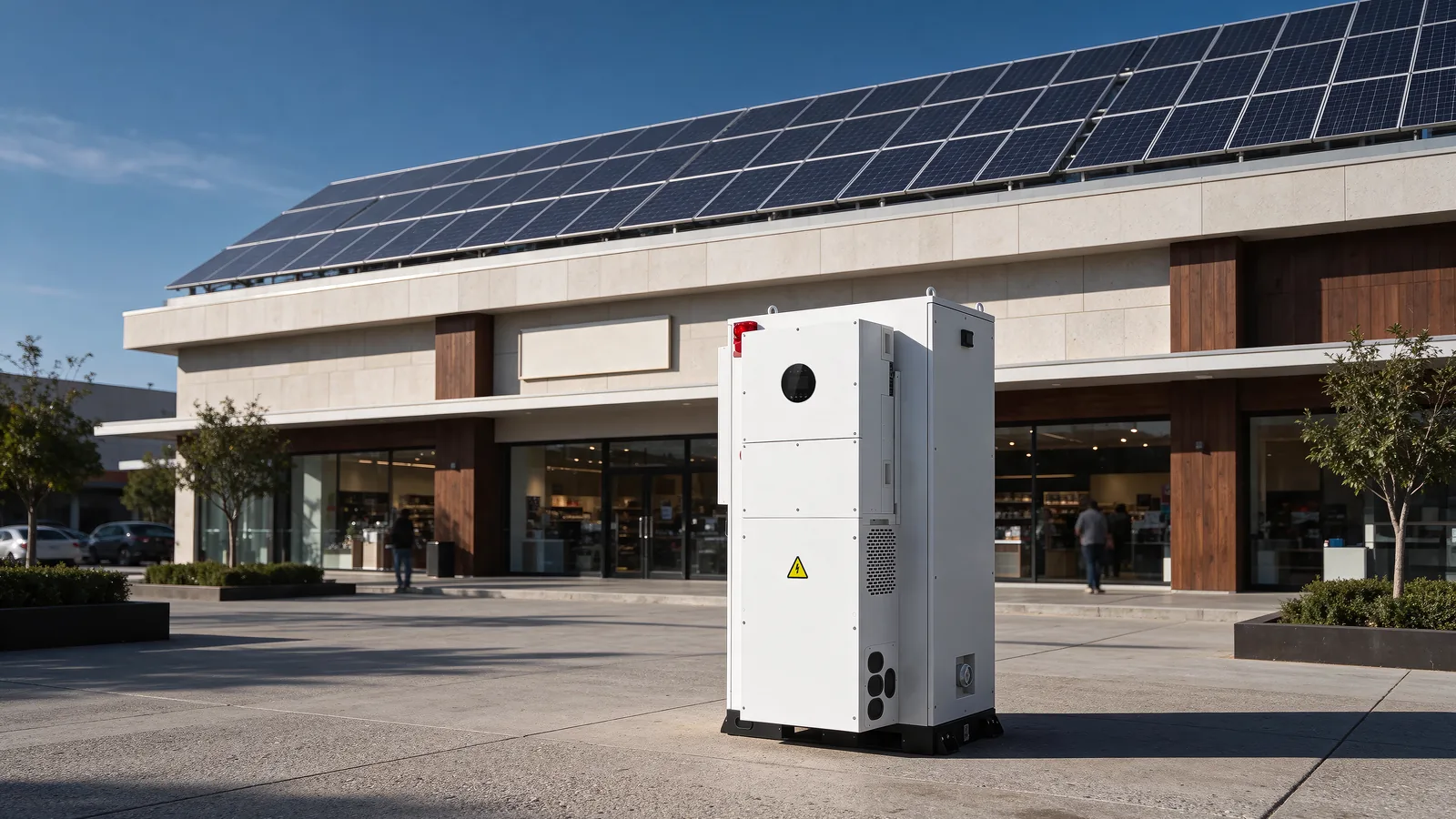
Yes, for the compressor and fan load on the board. The cabinet transfers in under 10 ms and runs the room from stored energy. How long the stock stays safe depends on the room's thermal mass, the door traffic and the load on the board.
A frozen room drifts slowly. A chilled room at plus 4 drifts faster, and a room full of warm product drifts faster still. The cabinet buys hours, and the hours needed are a question for the site's own temperature log.
Insurance and retail contracts usually state a temperature limit rather than a time. Covering the compressor load for the drift period is what keeps the room inside that limit.
The Start Is What Sizes the Cabinet
A compressor motor draws several times its running current for the first second or two. When three compressors restart after a transfer, the site sees one large step, and the cabinet has to carry it before the motors reach speed.
The cabinet delivers 150% of its rating for 10 seconds. A 60 kW cabinet carries a 90 kW step for that window, which covers the restart of a staged compressor bank.
- Staged restart is set at commissioning: compressors come back in sequence rather than together.
- Single-phase backup up to 22 kW per phase covers controls, lighting and door heaters.
- The 10 ms transfer keeps the controllers and the monitoring live, so the alarm log survives the outage.
Which Circuits Go on the Essential Board
Compressors, evaporator fans, controls and the door and defrost circuits are the usual four. Lighting and office load can follow if the cabinet has the energy and the site values the comfort.
| Circuit | Priority | Reason |
|---|---|---|
| Controls and monitoring | First | Alarm log and safe restart |
| Compressors | First | Temperature is the product |
| Evaporator fans | First | Air movement without fans is pointless |
| Defrost heaters | Second | Cyclical, can wait an hour |
A room kept off the board is a decision, not an oversight. The proposal states which rooms are covered and which are not, because a half-covered site is worse than a stated one.
A Short Outage Leaves a Short Recovery
When the grid returns, the compressors restart on the grid and the room pulls back to setpoint. A room that drifted 2 degrees recovers in minutes. A room that drifted 10 degrees takes hours and puts the stock at risk twice.
The cabinet recharges while the room recovers, so a second outage later the same day still finds a full pack. That matters in storm seasons, where the second event arrives before the first is forgotten.
Defrost cycles are paused during backup. A defrost that starts on a battery is a heater running on stored energy, and the controller holds it until the grid returns.
Hours of Cover, Room by Room
Add the running load of the covered compressors and fans, then multiply by the hours the site wants. Thirty kW for four hours is 120 kWh, which is one cabinet at its top energy point with 108 kWh usable.
A site with three rooms and one board may need two cabinets. Ten in parallel reach 600 kW and 4.8 MWh, and the room-by-room plan stays the same at any size.
Retail Stores and Convenience Shops
A supermarket or convenience store is a cold store with a shopfront: refrigeration runs all day, air handling runs while the doors are open, and the lights run longer than the staff do. The refrigeration load is usually the larger one and the one that cannot stop without stock loss.
Size it the same way: add the running load of the refrigeration packs and the air handling you want covered, then multiply by the hours the store needs to stay open. A 20 kW board for five hours is 100 kWh, which is one cabinet. A store that wants to ride a longer outage adds a battery cabinet rather than a bigger generator.
We do not quote a fixed number of hours for "cold chain". A room at −18 °C, a chiller at +2 °C and a frozen display case draw differently and hold temperature for different times; the table is built from the site's compressor list.
Certificates and the Terms in Writing
Certificates are CB IEC 62619, CB IEC 63056 and CEI 0-21. Warranty is 5 years on pack, inverter and cooling unit and 2 years on fire suppression. Cover starts 60 months after installation or 66 after shipment, extendable to 10.
The cabinet is IP55 with the inverter at IP66 and a C4 coating as standard, C5 as an option for washdown and coastal sites. It stands outdoors, so the plant room does not need to make space for it.
Questions about cold storage battery backup
How long will the cold room hold temperature?
That depends on the room, the product load and the door traffic, which is why the site's temperature log matters more than a general figure. The cabinet covers the compressor and fan load for the hours you size for, and the room drifts on its own thermal mass.
Can it start the compressors after a transfer?
Yes, at 150% of rating for 10 seconds, with staged restart set at commissioning. Compressors come back in sequence so the step stays inside the cabinet's overload window and the site avoids a second trip. Staged restart is written into the commissioning checklist, and the order is agreed with the site engineer.
Do the fans need to be on the board?
Yes. A compressor running without evaporator fans does not move heat out of the room. Fans draw little, and leaving them off wastes the compressor energy you just paid to store. The fans sit on the board with the compressors, and the survey sizes them together with the control circuit.
What happens to defrost during an outage?
It is held until the grid returns. A defrost heater on battery power spends stored energy on warming the coil, and the controller is set to block it during backup. The room loses nothing by waiting an hour. The controller resumes the defrost cycle when the grid returns.
The Room List and the Compressor Ratings
Tell us which rooms must hold temperature, the compressor ratings and the limit your contract states. You get the hours of cover and the cabinet count, in writing.