What Makes It a Microgrid and Not a Backup System
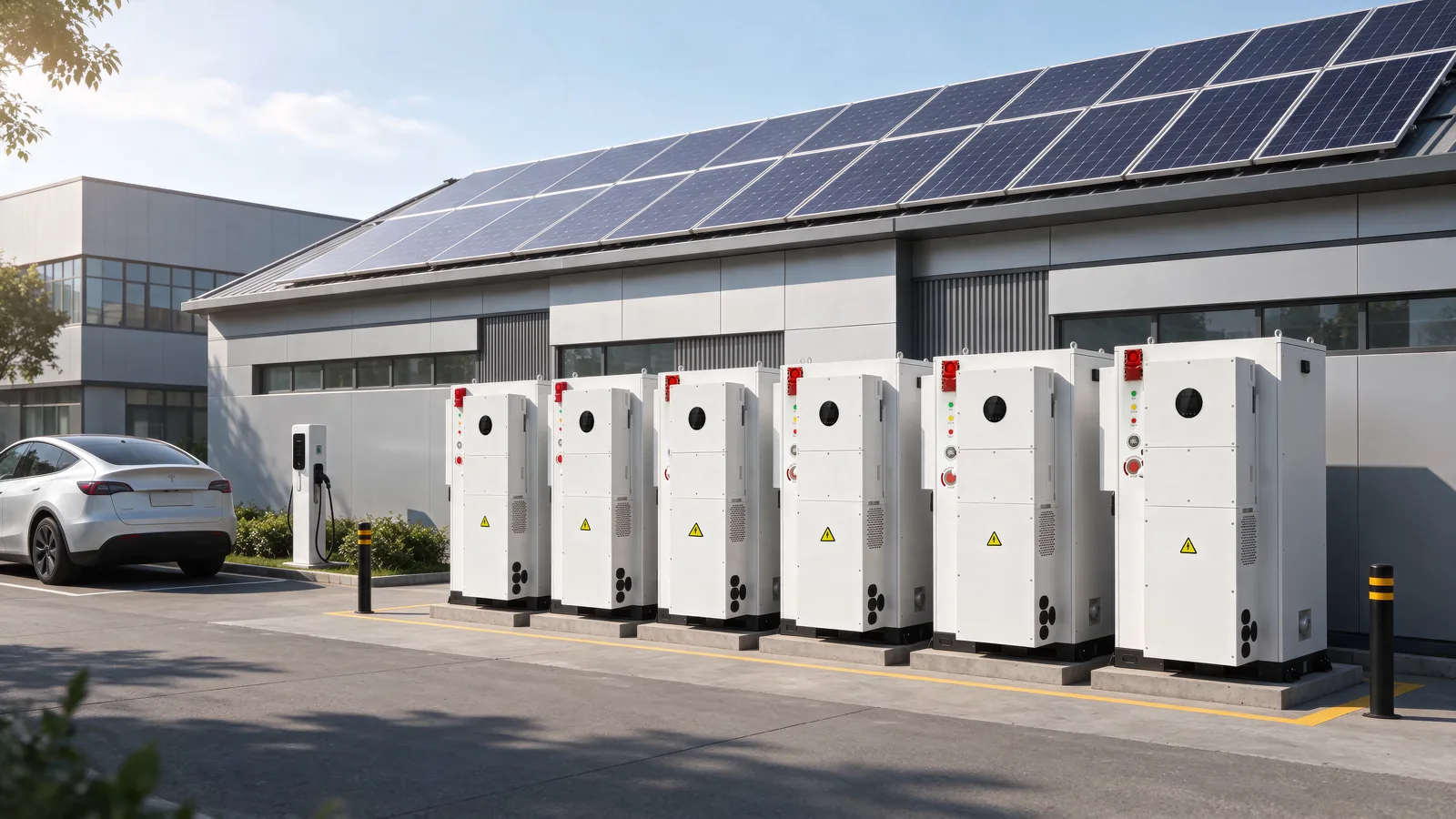
Yes, if the site has to run without the grid for hours rather than seconds. The cabinet takes generator and PV input, carries the load steps and holds the island steady. Island and black start need a changeover arrangement agreed during design.
A backup system transfers a board to battery and waits for the grid. A microgrid decides its own frequency and voltage, and keeps deciding while the grid is gone. The hardware overlaps, and the control and changeover do not.
That decision is written down before shipment. Which source is the reference, what happens when the generator stops, and how the site returns to the grid without a hard transfer.
Generator, PV and Battery on One Controller
PV connects to the cabinet's MPPTs, up to 120 kWp on the 60 kW model. The generator connects to the generator input. The battery sits between them and covers the difference in either direction.
- The generator runs at a steady load while the battery follows the site's swings.
- PV charges the battery first, then supplies the site, then curtails the surplus.
- The battery covers load steps at 150% of rating for 10 seconds, so the generator does not see the spike.
Coordination is a schedule rather than a hope. The controller knows the generator's band, the PV forecast and the state of charge, and it decides which source carries which hour.
Starting From Nothing
Black start means the site comes up with no live grid. The cabinet energises the island, then the generator starts and takes the average load. The sequence and the interlocks are agreed at design and tested at commissioning.
The battery carries the first step alone, which sets a floor on the power rating. A site whose largest motor starts before the generator is online needs a cabinet that can deliver the inrush. That means 150% for 10 seconds, checked against the motor's starting current.
A black start with one cabinet and a 250 kVA generator is a design case rather than a catalogue feature. It is confirmed against the site's load list before the order.
From One Cabinet to a Plant
One cabinet is 37.5 to 60 kW and 80 to 120 kWh. Ten in parallel reach 600 kW and 4.8 MWh on one controller, with one point of contact for the site.
| Site | Cabinets | Power | Energy |
|---|---|---|---|
| Remote lodge, 60 kW peak | 1 | 60 kW | 108 kWh usable |
| Island village, 180 kW peak | 3 | 180 kW | 324 kWh usable |
| Mine camp, 600 kW peak | 10 | 600 kW | 4.8 MWh |
Expansion adds battery cabinets for energy and full cabinets for power. Capacity should stay consistent across units in a parallel system, and the DC expansion stops at four cabinets per system.
Who Watches a Site With No Grid
The controller reports state of charge, source status and alarms over a cloud link where one exists. Firmware updates go out over the air, and most faults are diagnosed remotely before anyone travels.
Spare parts sit in four regional depots: EU, South Africa, Pakistan and Brazil. A remote site should hold one spare pack, and the service plan states who carries the freight.
The Documents a Microgrid Buyer Should Ask For
Certificates: CB IEC 62619, CB IEC 63056, CEI 0-21. Warranty: 5 years on pack, inverter and cooling unit and 2 years on fire suppression. Cover starts 60 months after installation or 66 after shipment, extendable to 10.
Ask for the commissioning checklist, the island-mode test record and the as-built single-line diagram. Those three documents show whether the island mode was tested or assumed.
Questions about microgrid battery storage
Can it run off-grid?
Yes, with the changeover arrangement agreed during design. The cabinet takes generator and PV input and holds the island steady. A site that needs island operation it can count on should plan the changeover and the black start sequence before the order. A site check comes before any of that is decided.
How many units can run in parallel?
Up to 10, for 600 kW and 4.8 MWh on one controller. Energy expansion adds battery cabinets to a maximum of four per system, and power expansion adds full cabinets. Keep capacity consistent across units. The parallel limit applies to units on the same controller, and mixing models is checked at design.
Does the transfer drop the load?
Transfer to backup takes under 10 ms, so controls and drives ride through. A transfer back to the grid after an outage is a separate sequence, and the design states whether it is open or closed transition. Drives and controls ride through, and the load-step window is 10 seconds at 150%.
What does black start need?
A battery with enough power to carry the first load step, a generator with a compatible start circuit, and a written sequence with interlocks. The largest motor start sets the floor on cabinet power and is checked at design. None of that is decided at the factory, so the sequence is written before shipment.
The Site Load List and the Generator Rating
Tell us the peak, the largest motor start and what the site must keep running. You get the cabinet count, the island arrangement and the black start sequence, in writing.