The Essential Board Is the Whole Design
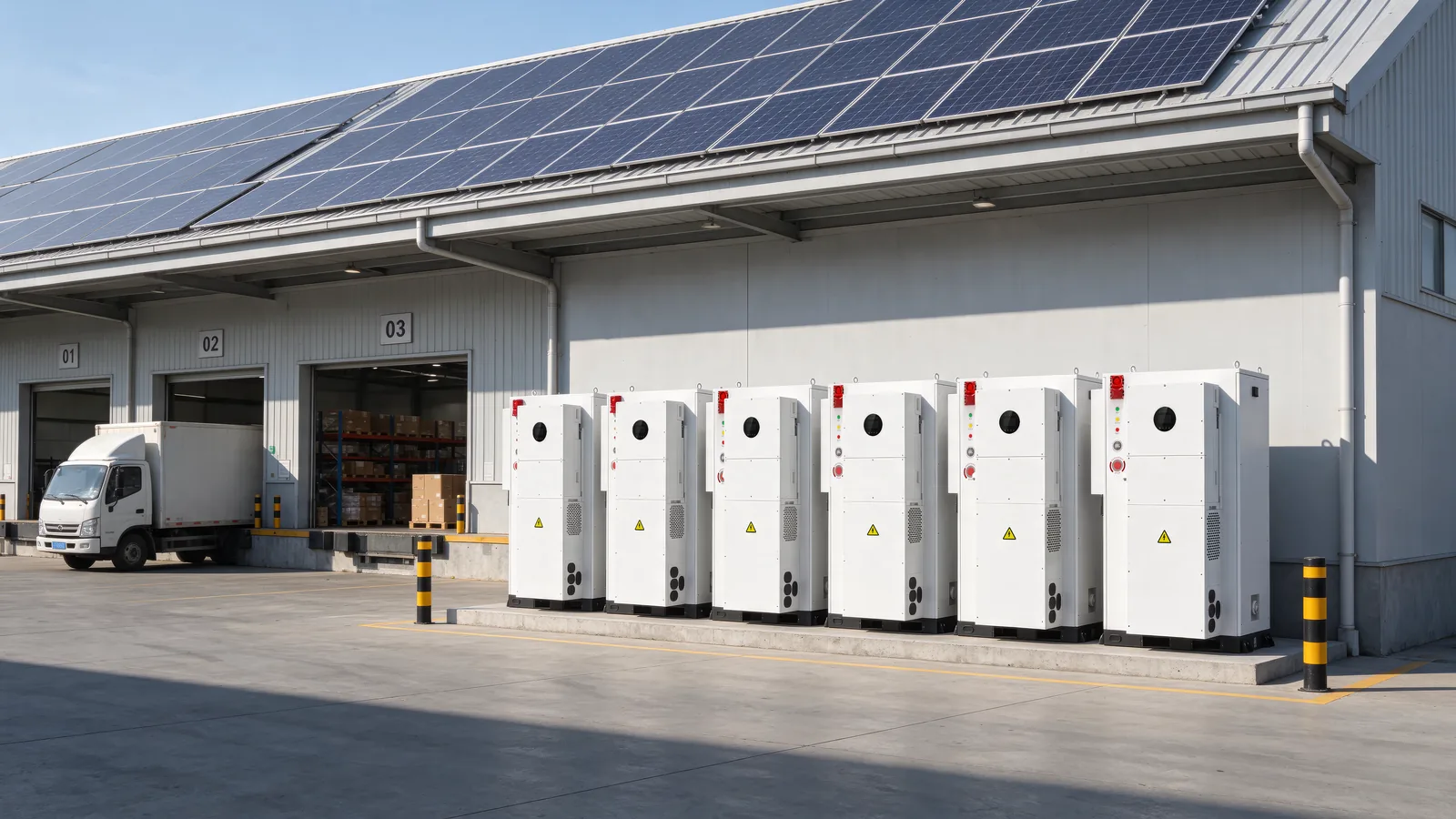
Yes, for the loads you put on the essential board. The cabinet transfers in under 10 ms and runs that board from 108 kWh usable. It does not back up the whole site, and a load left off the board stays off until the grid returns.
Commissioning starts with a list. Which circuits keep running, in what order, and for how long. Controls and instrumentation usually come first, then refrigeration or process load, then lighting and comfort load.
The board is physically smaller than the site. A 200 kW site may put 40 kW on the board and accept that the rest waits. That choice sets the cabinet count, not the other way round.
Three Loads, Three Runtimes, One Cabinet
| Load on the board | Runtime | Energy used |
|---|---|---|
| 15 kW | 7.2 hours | 108 kWh |
| 30 kW | 3.6 hours | 108 kWh |
| 60 kW | 1.8 hours | 108 kWh |
Divide usable energy by the load and the table checks out: 108 kWh divided by 15 kW is 7.2 hours. The same arithmetic gives the other rows, and the 1.8-hour figure at 60 kW is the value published for the 120 kWh cabinet.
Adding battery cabinets raises the hours and leaves the power where it is. Three extra battery cabinets take one system to 480 kWh while the inverter stays at its own rating.
Ten Milliseconds Covers the Loads That Cannot Blink
The transfer switch is inside the cabinet and switches in under 10 ms, which holds computers, controls and drives through a grid loss. Motors on the board see a brief interruption and ride through it.
A UPS and this cabinet do different jobs. A UPS carries a rack for minutes on a double-conversion path. The cabinet carries a board for hours, with no double conversion in the normal path.
- 150% overload for 10 seconds covers motor inrush on the board.
- Single-phase backup up to 22 kW per phase, with 100% three-phase imbalance.
- The backup reserve is held back from the peak-shaving logic, so an outage at the peak hour still has energy.
What Decides the Cabinet Count
Two numbers decide it. The kW on the essential board and the hours you need. A 40 kW board for four hours needs 160 kWh, more than one cabinet holds, so the choice is two cabinets or a shorter hold.
Motor starts set a floor on the power rating. A pump or compressor that needs 150% for 10 seconds needs a cabinet that can deliver it, and the starting current is checked at design.
Refrigeration is where the load and the value diverge. A cold room may need 30 kW to run and twelve hours to protect the stock, and the cabinet count follows the hours.
Alarms, Fuel and the Second Outage
The controller reports the transfer, the load on the board and the state of charge. A site with a generator can hand over when the pack reaches its floor, and the generator charges the pack while it runs.
After the grid returns, the cabinet recharges and the board returns to the grid supply. Nothing needs resetting on site unless the fault is upstream of the cabinet.
Terms That Cover the Years After Handover
Warranty is 5 years on pack, inverter and cooling unit and 2 years on fire suppression. Cover starts 60 months after installation or 66 after factory shipment, extendable to 10 years. Spare parts sit in four regional depots: EU, South Africa, Pakistan and Brazil.
Certificates are CB IEC 62619, CB IEC 63056 and CEI 0-21. A North American or Japanese project needs a listing this product does not carry, and we will say so on the first call.
Battery Backup or UPS: Where the Line Sits
A UPS keeps a rack or a room alive for minutes; this cabinet keeps a site's essential board alive for hours. Both transfer in milliseconds, but a UPS is sized in kVA for a defined load and the cabinet is sized in kWh for a runtime. For a whole building, the cabinet is the cheaper way to cover an outage longer than a few minutes.
| UPS | This cabinet | |
|---|---|---|
| Sized by | kVA for a defined load | kW plus kWh for a runtime |
| Typical runtime | Minutes | 1.8 to 7 hours, by load |
| Typical load | IT rack, lab, control room | Essential board of the building |
| Where it sits | Inside a room | Outdoor pad or plant room |
| Transfer | Static, milliseconds | Static transfer switch, under 10 ms |
Questions about commercial backup power with battery storage
Can it back up the whole site?
Only if the whole site fits the inverter rating and the stored energy. Most sites put a subset on the essential board: controls, refrigeration, lighting and the loads that stop production. The board is agreed at commissioning and the sizing follows it.
Is 10 ms fast enough for my equipment?
It holds computers, controls and variable-speed drives through a grid loss, which is the usual requirement. A load that needs a double-conversion UPS with no transfer at all stays on its own UPS, and the cabinet backs up the rest.
How long can it run at 15, 30 or 60 kW?
On 108 kWh usable: 7.2 hours at 15 kW, 3.6 hours at 30 kW and 1.8 hours at 60 kW. Divide the usable energy by the load to check any figure. Adding battery cabinets raises the hours without raising the power.
What happens when the battery runs out?
The board transfers back to the grid if the grid is available, or to a generator if one is connected. A generator can also charge the pack while it runs, which extends the outage cover beyond the stored energy. The board order agreed at commissioning decides what stays on until then.
Is the cabinet a UPS?
No. It uses the same static transfer principle, but a UPS covers a defined load for minutes and this cabinet covers the essential board for hours. If a site needs both, they sit on different boards and do different jobs.
What is a backup power supply for a commercial building?
It is whatever keeps the loads that cannot stop running alive through an outage. That can be a diesel generator, a battery cabinet or both. The cabinet takes over in under 10 ms, and the generator covers longer outages once the battery is empty.
Where does UPS backup power stop and a battery cabinet start?
UPS backup power covers a defined load for minutes; the cabinet covers the essential board for hours. They answer different questions: a UPS protects equipment from a short interruption, and the cabinet protects the building from a long one. Sites that need both put them on different boards.
The Load List for Your Essential Board
Tell us which circuits must stay live and for how long. You get the runtime at your load, the cabinet count it needs and the transfer arrangement, in writing.