Is This Right for Your Site?
A transformer rating is a first filter. What decides whether a cabinet earns its space is the shape of the load: the 15-minute demand profile, how the utility bills demand, the voltage and phase arrangement, power factor, whether solar is already on site, what the network operator allows to be exported, and how much room there is beside the switchgear.
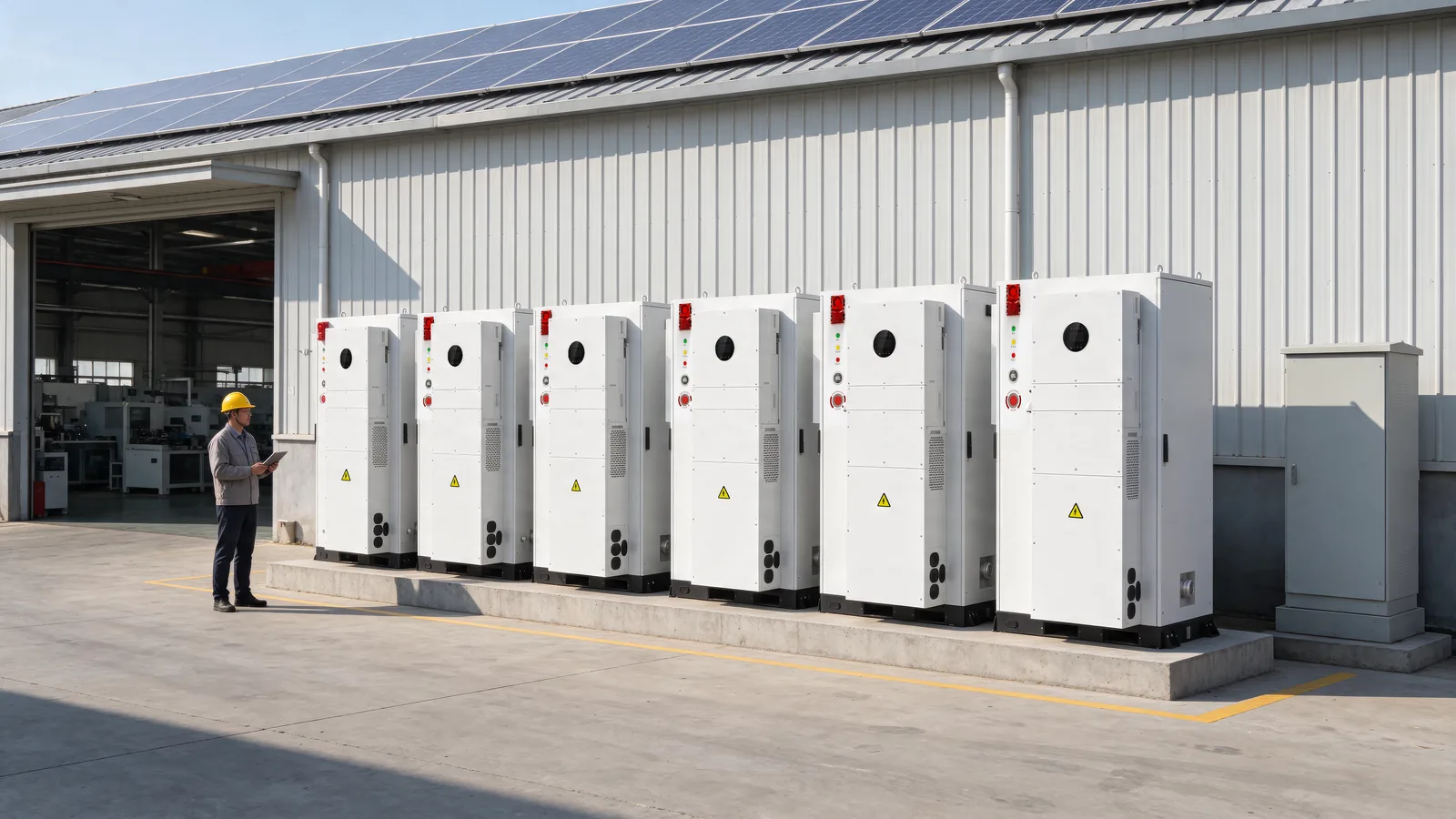
Factories
Shift patterns put 20 minutes of load on the bill for the whole month. Shaving the peak costs less than a larger transformer.
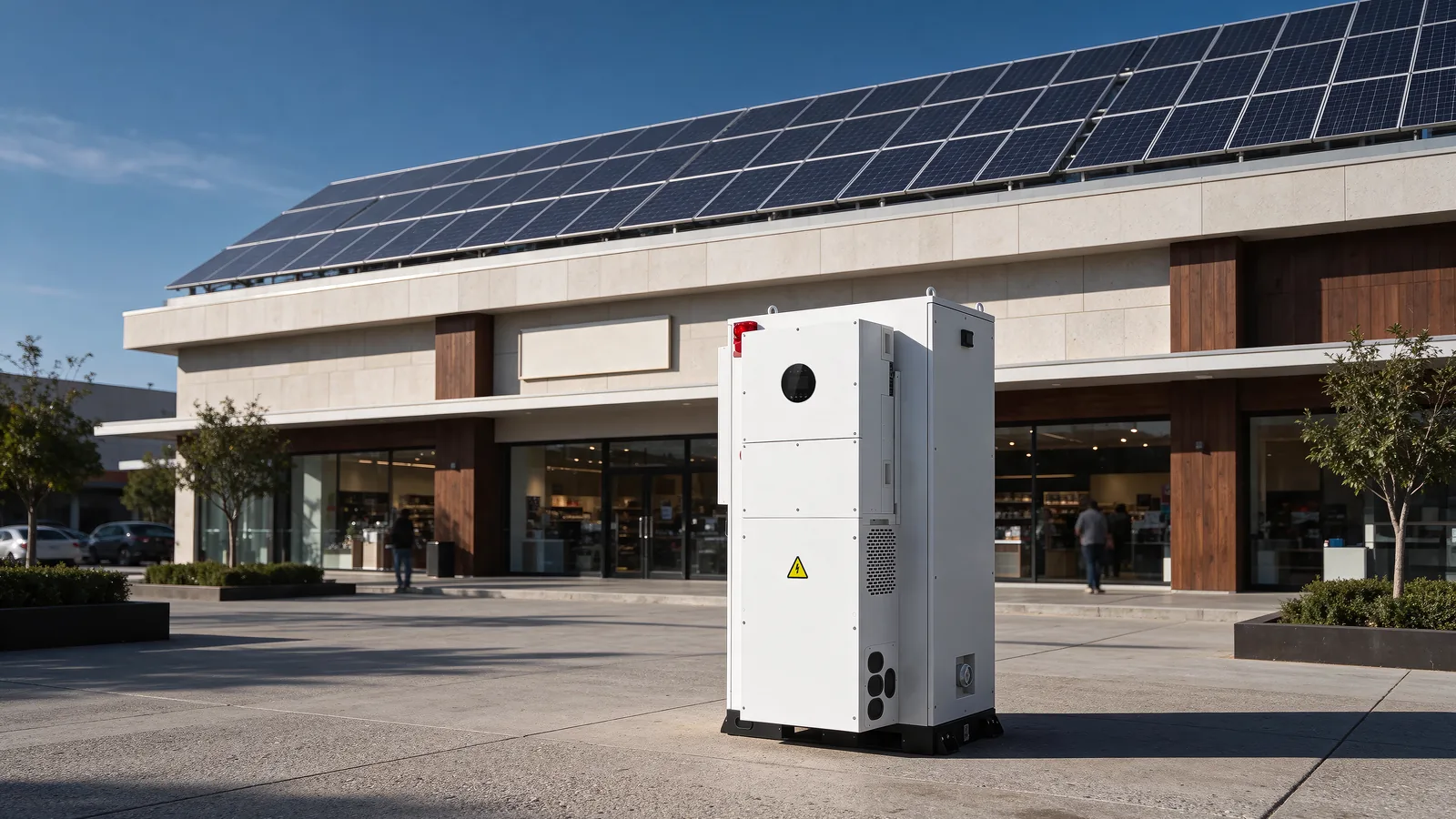
Cold storage and supermarkets
A compressor stop means stock, not downtime. Backup covers the control panel, compressors and door systems on the essential board.
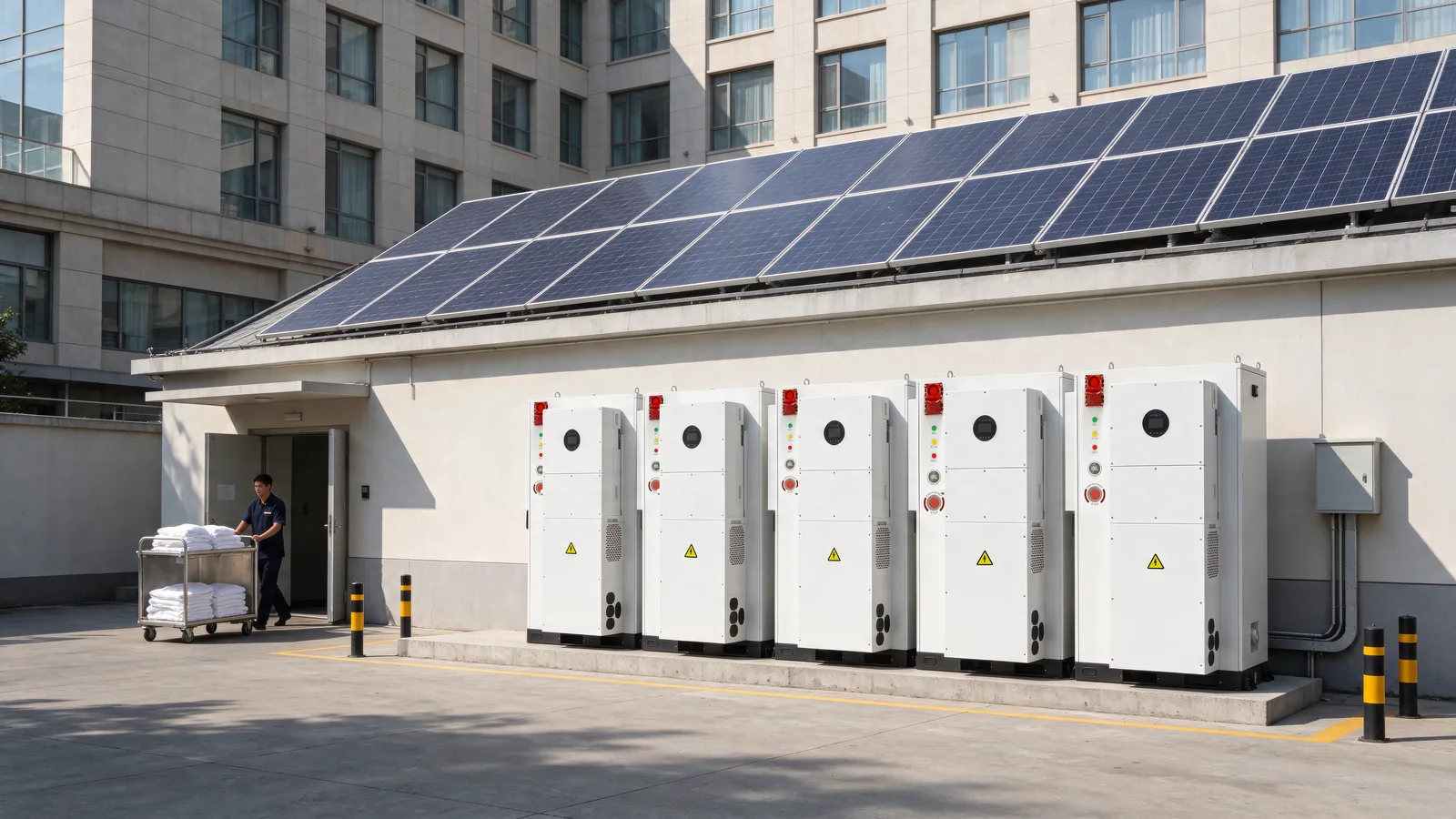
Hotels and resorts
Lifts, kitchens and AC ride through short outages, provided those circuits sit on the essential board and the outage fits the runtime.
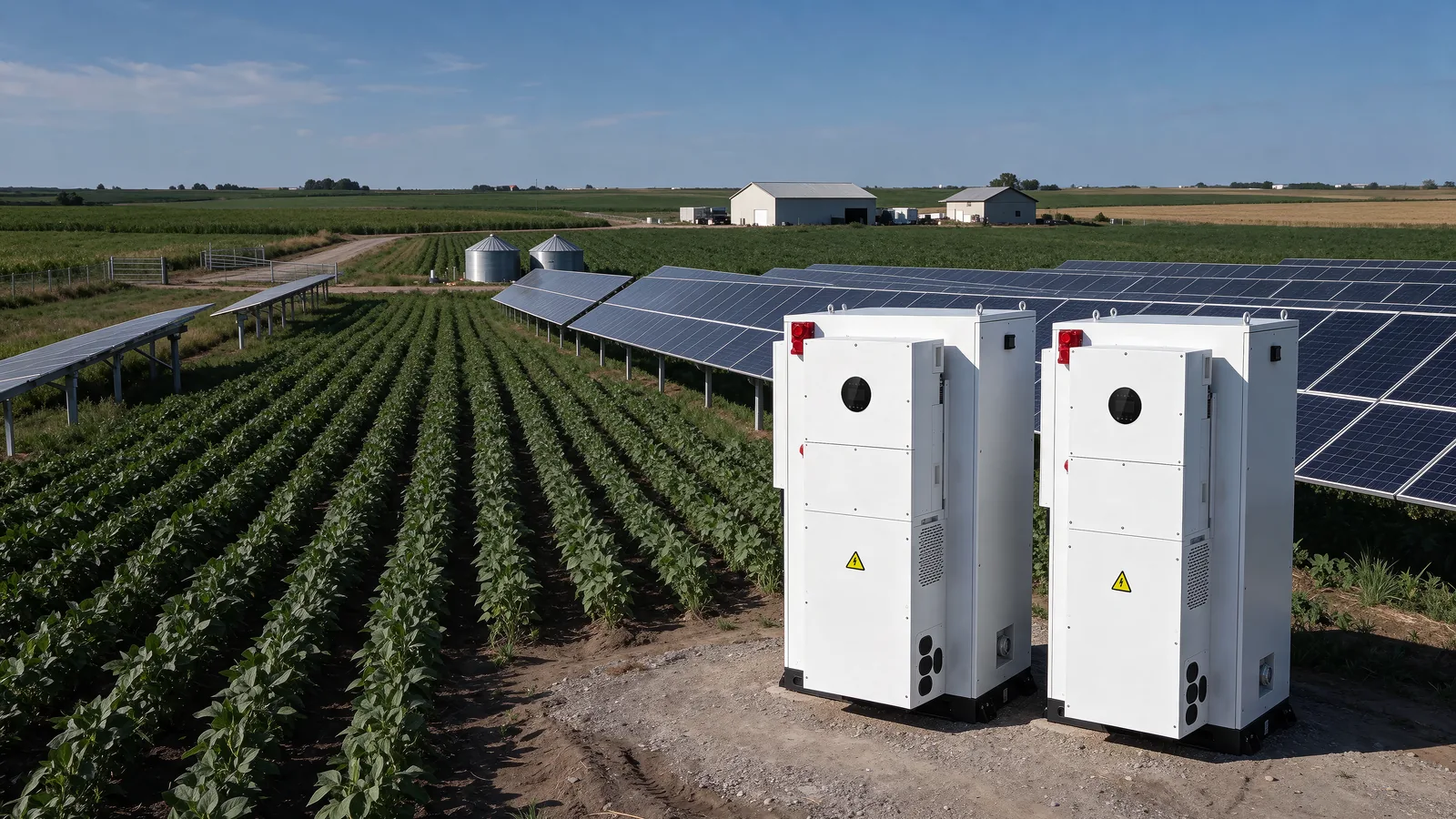
Farms and irrigation
Pump starts draw a hard inrush. The cabinet supplies 150% for 10 seconds, and the pump's starting current is checked before sizing.
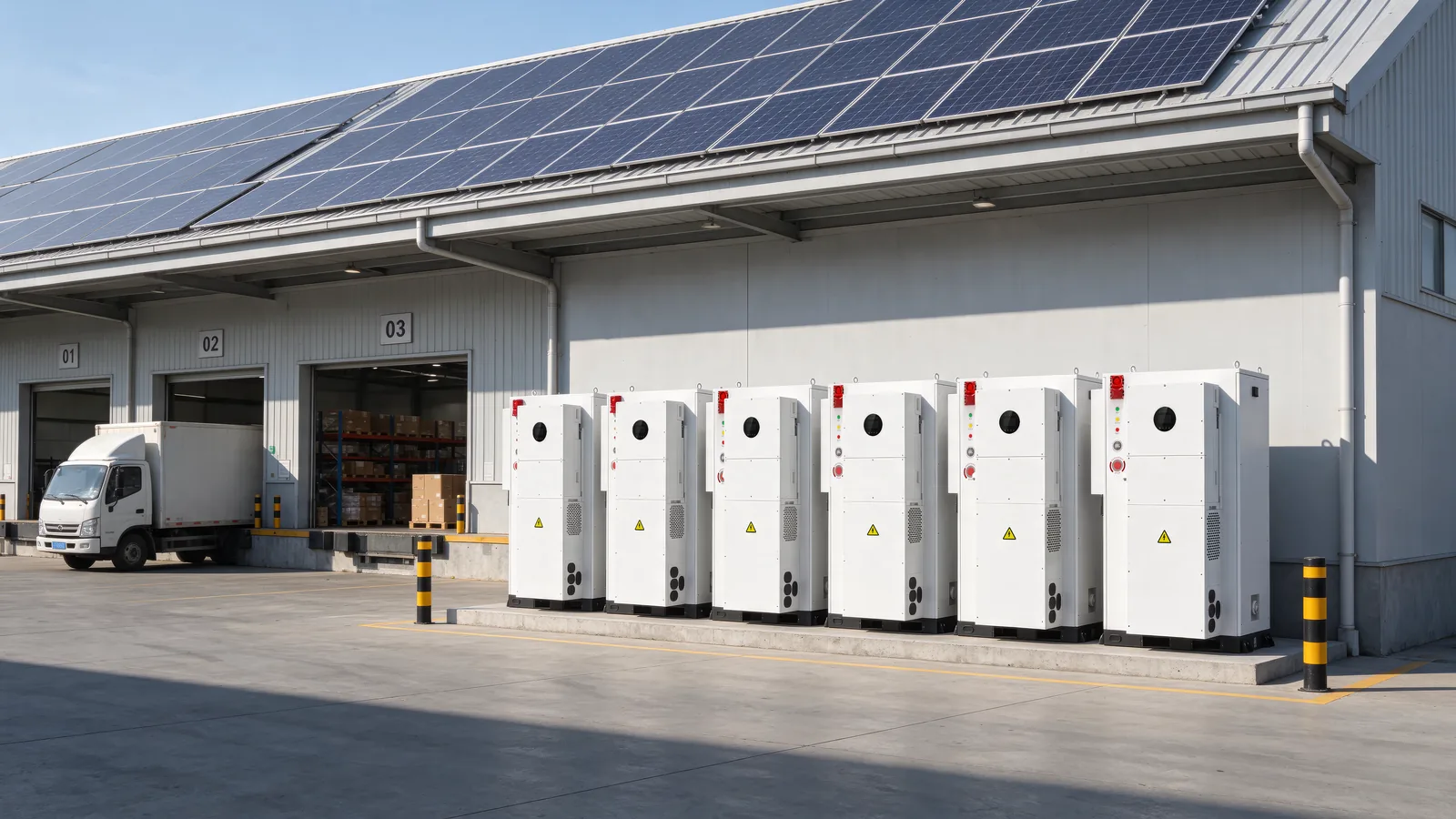
Warehouses
Chargers, conveyors and cold rooms can be added behind the meter without waiting for a utility upgrade, subject to what the network operator approves.
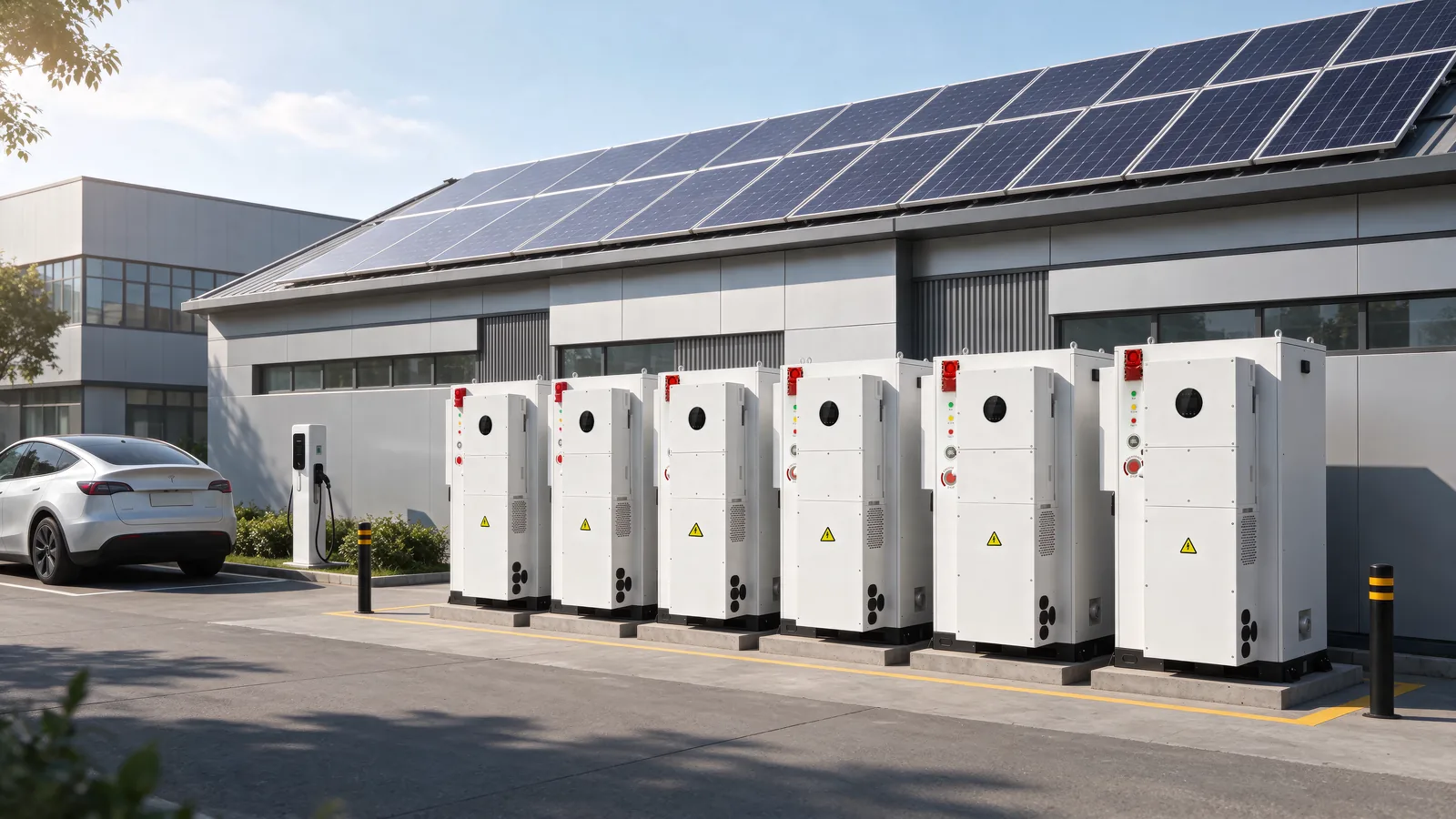
EV charging sites
Two or three cabinets absorb the charging peak so the site does not pay for capacity it uses a few hours a day.
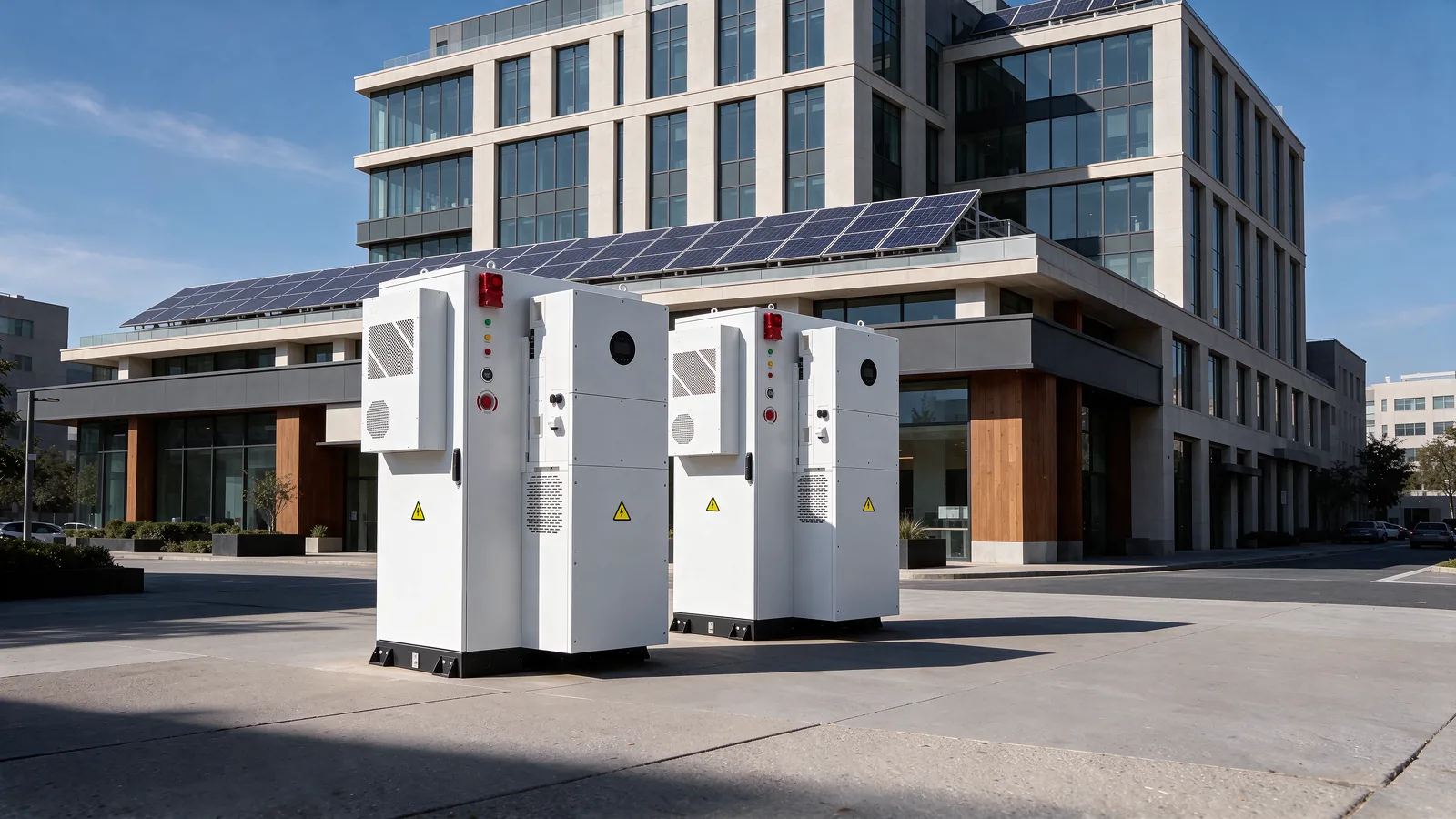
Clinics, offices and campuses
Sterilisation, lifts and comms rooms on the essential board; daytime demand on the bill. One cabinet or one per building, decided by where the circuits sit.
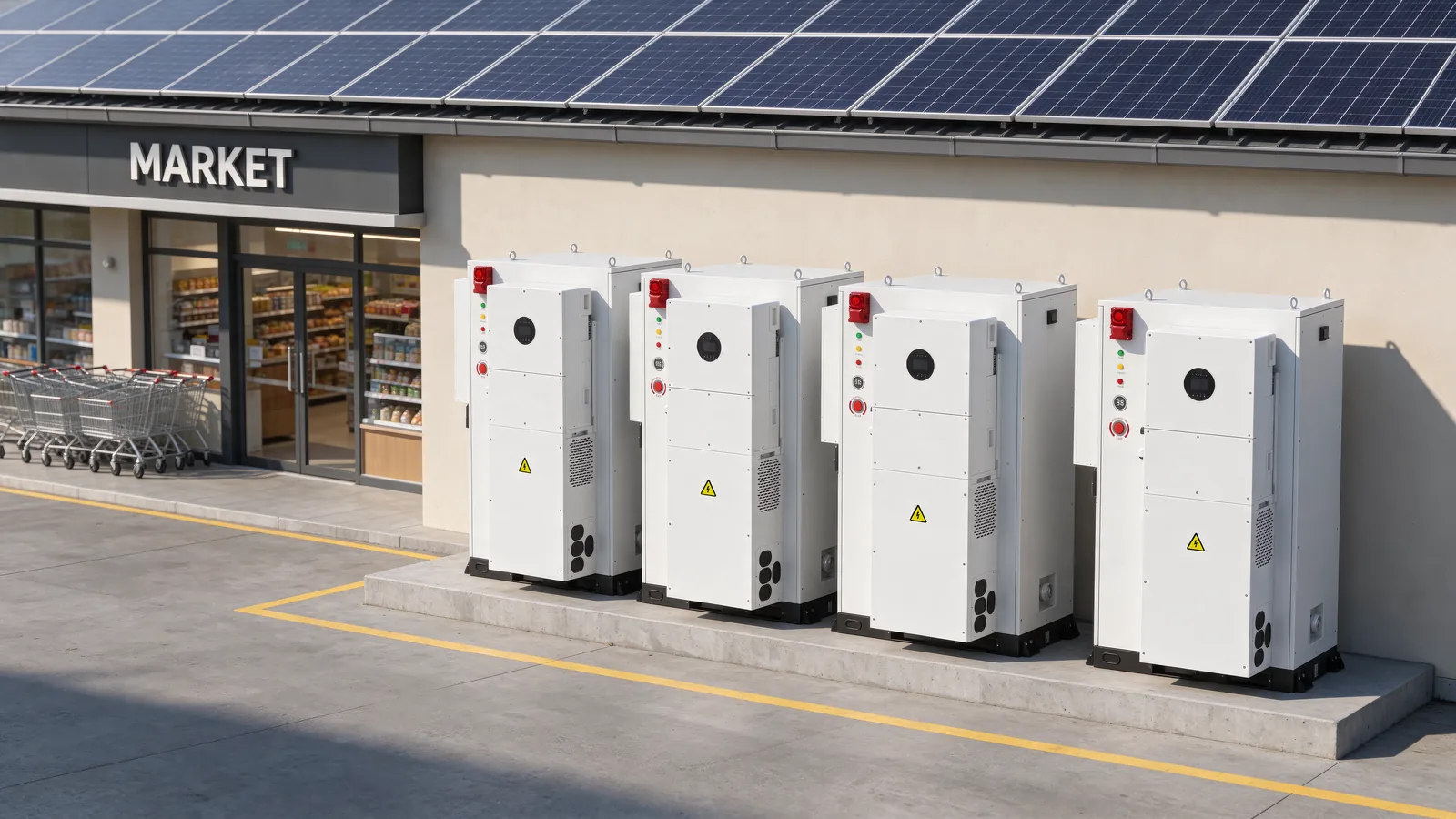
Retail, showrooms and dealerships
Trading hours set the peak and the lights cannot go out. The cabinet shaves the afternoon peak and keeps the essential board — lighting, tills and HVAC — live through a short outage.
Probably not for you if the site is in North America or Japan and the project needs UL 9540 listing. Our certificate set is CB IEC 62619, CB IEC 63056 and CEI 0-21 for Italy. A project in Latin America on 208/220 V needs the separate low-voltage line, not this cabinet. A site using under 800 kWh a day is usually better served by a much smaller system, and a site above 400 kVA of demand is a different product class. A single house or a villa is smaller than this cabinet; tell us the site and we will point you to the right product rather than turn the enquiry away.
What a Quote Is Built From
There is no published list price. What we publish is how the number is built: the scope lines, what sits inside them, what sits outside, and the questions that tell two quotes for the same cabinet apart.
Two suppliers can quote the same 100 kWh cabinet far apart because they are counting different work. The cheaper-looking quote usually leaves more on site. Start with the form. Our sales team asks for one recent bill, then the quote comes back with the scope broken out so you can line theirs up against ours.
In the cabinet price: the cabinet itself — hybrid inverter, LFP packs, BMS, fire suppression and cooling — plus the DTSU208 meter, factory testing and the handover documents.
Quoted separately, or done on site: battery cabinets, the iEMS gateway and the CTs; freight and insurance by destination; foundation and civil works; the AC cable to your switchgear; lifting and installation labour; grid-connection fees; on-site commissioning labour; and the data link.
Every quote leaves something out, ours included. The list above is the split we quote from; compare any other offer against it line by line, and the gap usually names itself.
Line by line
Every quote carries the same scope lines, so a difference in total can be traced to a specific line instead of guessed at.
Assumptions in writing
Power rating, energy, backup duration and site conditions are written down, not implied by a single number.
What comes back
A scope sheet with each line priced, the assumptions written down, and the delivery window stated in the same document.
Pick by Your Bill, Not by the Datasheet
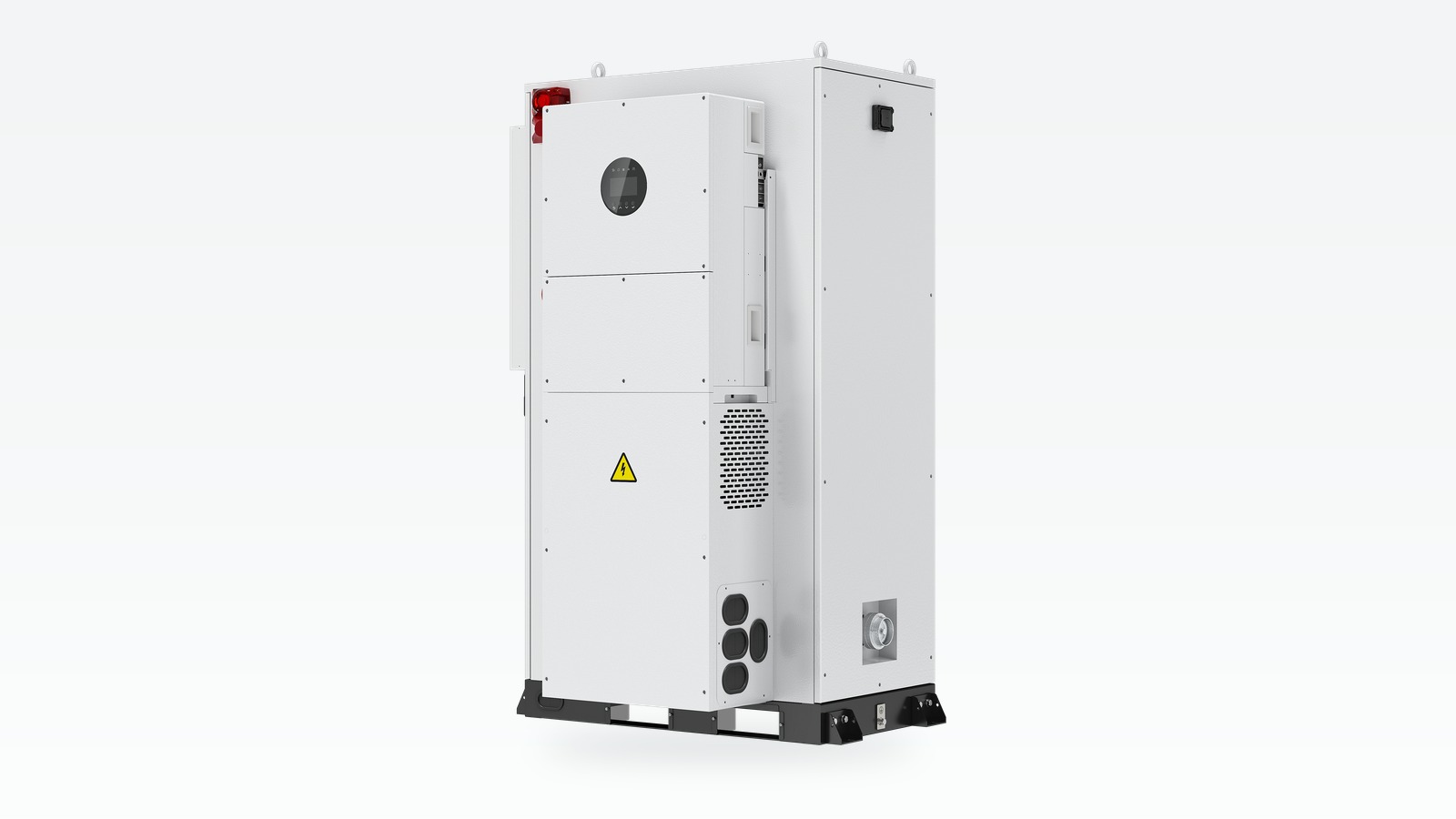
Five cabinets span 37.5 to 60 kW. The bill and the backup requirement decide between them, not the biggest number on the sheet.
| For a site like this | Cabinet (model page) | Power | Usable energy | PV input |
|---|---|---|---|---|
| 100–150 kVA, short backup windows | BES-H37.5X80 / BES-H40X80 | 37.5 / 40 kW | 72 kWh | 75 / 80 kWp |
| Around 60–90 kW peak | BES-H49.9X100 / BES-H50X100 | 49.9 / 50 kW | 90 kWh | 99.8 / 100 kWp |
| Around 90–120 kW peak, longer backup | BES-H60X120 | 60 kW | 108 kWh | 120 kWp |
The model codes are in the specification table because procurement needs them. What you choose is the power rating that covers the peak and the usable energy that covers the outage. Usable energy is 90% of nameplate: the 120 kWh cabinet gives 108 kWh, not 120.
All five cabinets are 1349 × 2100 × 990 mm, IP55, and weigh 1,025 to 1,303 kg. The 37.5 and 40 kW models share one enclosure. The 49.9 and 50 kW models share another.
Four Boxes' Worth of Gear in One Cabinet
A conventional system is an inverter, a battery cabinet, a transfer switch and a generator interface, wired together on site. Each junction is a terminal to torque, a cable to route and a place for something to go wrong. The LuminBlock H puts all four inside one enclosure, pre-wired and pre-commissioned in the factory.
One conversion, not three
PV and battery share one DC bus inside the cabinet, so energy crosses one AC/DC stage instead of the three a split AC-coupled build needs. The manufacturer measures about 2% loss across that conversion stage, against 6% for the three-stage build; whole-system round-trip efficiency is quoted separately at 88% or better. The 15% total-cost figure is the manufacturer's comparison, so check it against your own scope.
Fire stays inside the cabinet
Three passive layers: cell venting, pack-level temperature sensing, and aerosol suppression driven by smoke, heat and water sensors. AFCI and string-level shutdown are standard, not options.
45 °C at full power, no chiller
Aluminium-nitride heatsinks and two separate air paths hold full output at 45 °C. There is no coolant loop and no chiller, so the site team needs no refrigeration specialist.
A pack swap takes four steps
About 140 kg per pack, and no coolant to drain. Open the pack breaker and disconnect the DC cables, slide the pack out, slide the new one in, reconnect. Trained crews do the work, so the warranty stays intact.
The generator connects directly
No external ATS and no separate generator panel. The generator runs in parallel with the battery, and the transfer switch is inside the cabinet.
Motor starts and unbalanced loads
150% for 10 s rides through most pump and compressor starts. Check the largest motor's actual starting current before sizing: a direct-on-line motor can draw several times its running current, and a soft starter or VFD changes the answer. The backup port carries 100% three-phase imbalance, up to 22 kW on one phase.
Who Fixes It When It Breaks
Most faults on a battery system are software or communications faults, and most of those are fixed remotely. The cabinet reports to a cloud platform; the service team reads the alarm, decides whether it is a configuration issue, a firmware issue or hardware, and only then books a site visit.
- Remote diagnosis on every unit, with over-the-air firmware updates.
- Four regional spare-part depots: EU, South Africa, Pakistan and Brazil.
- Warranty: 5 years on pack, inverter and cooling unit, 2 years on fire suppression. It runs 60 months from installation or 66 months from factory shipment, whichever comes first, extendable to 10 years in the contract.
- RMA route agreed in the contract, including who carries labour and freight.
Documents you can check before you sign: copies of the CB IEC 62619 and CB IEC 63056 certificates and the CEI 0-21 certificate, a sample of the warranty terms and the RMA route, the service coverage and the response commitment written into the contract, and the commissioning checklist that comes with the handover pack.
A Product Site Run by the Manufacturer
CabESS is the product site for the LuminBlock H Series. It is run by Hangzhou Livoltek Power Co., Ltd., the company that manufactures the cabinet. It is not a reseller listing and not a marketplace page: the people answering the form work for the manufacturer.
Installation and commissioning are carried out by Livoltek-certified crews. At handover the site gets the commissioning report, the as-built diagram and the insurance pack, and those documents are what the warranty is checked against.
If you would rather work through an EPC, an installer or a distributor, that is a normal route too. The four partner routes are laid out with what each side brings. The quote and the warranty come from the same manufacturer either way.
Direct or through a partner, the contract names Hangzhou Livoltek Power Co., Ltd. Service and spare parts follow the same four regional depots.
From First Call to Commissioning
- Your site first, the bill later Start with the form: the country, what the site does and what cannot go dark. One recent bill makes the sizing exact, but it is not a condition for a first answer.
- A sizing proposal, with the arithmetic Power rating, usable energy, backup duration and the assumptions behind each. If a smaller cabinet does the job, the proposal says so.
- A quote with the scope broken out Included, excluded and the site lines that are priced separately, in two working days of a complete enquiry.
- Site check and delivery Foundation, clearances, cable route, hoisting and the grid application are confirmed before the cabinet ships.
- Commissioning and handover Test report, as-built diagram, insurance pack and operator training.
Questions about the sites this cabinet fits
How much does a commercial battery storage system cost?
We do not publish a list price. The cabinet is priced for your site: power rating, the scope you need, the destination and the certification scope all move the number. Start with the form. Our sales team asks for one recent bill, then you get a quote with the scope broken out, within two working days.
Can the cabinet run without solar?
Yes. The cabinet charges from the grid and discharges at peak, and it provides backup whether or not PV is installed. With PV it also stores surplus generation instead of exporting it at a low price.
Can it work with my diesel generator?
Yes. The generator runs in parallel with the battery, the transfer switch lives inside the cabinet, and no external ATS is required. Generators are sized so the cabinet can absorb load steps without dropping the generator.
What happens during an outage?
The cabinet transfers to backup in under 10 ms. It supplies the essential board, not the whole site: the loads you choose at commissioning. Black start and island operation need the changeover arrangement agreed during design.
How long does the battery last?
The warranty covers 6,500 cycles or 10 years to 70% state of health at 25 °C, 0.5P and 90% depth of discharge. Cells are tested to 8,000 cycles. Service life depends on temperature, cycle depth and how hard the site works the cabinet.
Who maintains it?
Remote monitoring and over-the-air firmware updates cover most issues. On-site maintenance is annual for most sites, quarterly for heavy industrial use. Pack swaps are done by trained crews; a pack weighs about 140 kg and the swap is four steps (disconnect the DC cables, slide the pack out, slide the new one in, reconnect).
Can I expand later?
Yes. Add up to four battery units in parallel to raise energy to 480 kWh per system, and up to 10 cabinets in parallel for 600 kW / 4.8 MWh. Expansion adds duration, not power, and capacity should be kept consistent across units in a parallel system.
What certifications does it hold?
Certificates: CB IEC 62619, CB IEC 63056 and CEI 0-21 for Italy. Compliance reports: IEC/EN 62477-1, the EN IEC 61000 series, IEC 62109, IEC 61727 and 62116, EN 50549-1/-10, IEC 60730 and UN38.3. It does not hold UL 9540 or NFPA 855; if the project is in North America, say so on the first call.
What is the lead time?
Lead time depends on the power rating, destination and certification scope, so it is quoted per project rather than published as a number. Documentation is released within 15 days of contract signature.
Where to go next
Request a Quote
Seven fields, no attachments. The site, what it does, and how to reach you.
The form comes first because it is the fastest route to a scoped quote. If you already have a quote in hand and want to compare scopes, start with the quote comparison instead.