What Stops When the Power Goes Out
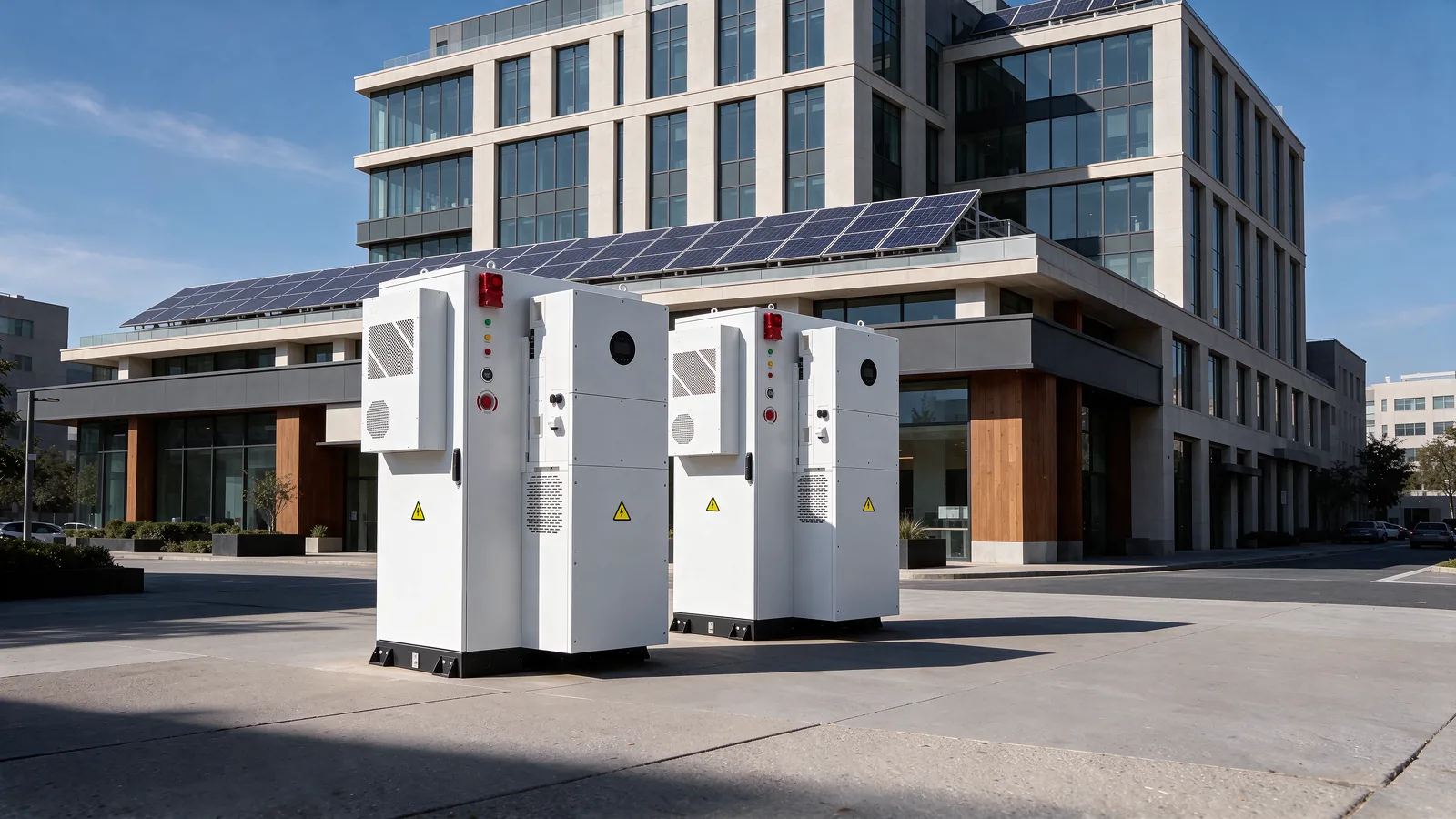
For the circuits you put on the essential board, the cabinet transfers in under 10 ms and runs them from 108 kWh usable. For a clinic that means sterilisation, cold storage and the chair in use; for an office, lifts, the comms room and occupied floors; for a campus, the block or hall on the board. Everything outside the board stops, and that is normal.
The board list is where the money is decided. A clinic that keeps sterilisation running but loses the lifts still has a waiting room full of people on the first floor. An office that keeps the lifts but loses the comms room has a building full of people who cannot work. Write the list first, then size the cabinet against it.
The cabinet is one outdoor unit, 1349 × 2100 × 990 mm and 1,303 kg at 120 kWh, IP55, so it does not need a plant room and does not need a diesel generator beside it. The connection is made at the switchgear, and the transfer switch is inside the cabinet.
Sterilisation, Cold Chain and the Chair in Use
A dental or day-surgery clinic has three kinds of load that matter: the steriliser and its cycle, the vaccine or sample fridge, and the treatment chair or imaging unit in use. The first two are small and constant. The third is where the specification work happens.
Imaging equipment carries its own requirements from the manufacturer, and those requirements are checked by the project engineer before anything is quoted. A battery cabinet is not a UPS and does not replace one; where an imaging suite needs double conversion, that decision sits with the equipment vendor and the electrical designer. The cabinet's job is the rest of the board.
The runtime question is answered the same way as everywhere else on this site: add the running load on the board, multiply by the hours the clinic wants to stay open. Twenty kW for four hours is 80 kWh, which fits inside one cabinet with margin.
The Peak Is at 11 a.m., Not at Night
An office is a daytime load. Lifts, air handling, kitchen equipment and the comms room all run when the building is full, and the 15-minute demand that sets the monthly charge usually lands mid-morning. That shape is the reason a cabinet earns its place on an office site even when outages are short.
Backup and bill work are the same hardware set to different limits. During a working day the cabinet follows the load; during the morning ramp it holds the site's import below the level that would trigger a higher demand charge. Ten units in parallel reach 600 kW and 4.8 MWh when a building group grows past one cabinet.
The single-phase limit matters for offices that back up a kitchen or a comms rack: 22 kW per phase. Three-phase loads on the board are covered at the cabinet's full rating.
One Cabinet or Five? Distribution Is the Decision
A campus is a distribution problem before it is a storage problem. One cabinet at the incoming switchgear covers the loads that share that board; a cabinet per building covers more circuits but multiplies the units, the surveys and the maintenance points. The right answer depends on where the critical circuits actually sit.
Paralleling is how the site grows without re-engineering: up to ten cabinets share one AC bus, one controller and one set of meters. Additional battery cabinets add energy on the DC side, up to three per system and 480 kWh in total, so a campus can start with one cabinet and add hours before it adds power.
The campus case we can point to is a 175 kW / 300 kWh PV and storage project across teaching buildings in Spain. It uses 25 kW hybrid inverters, not the LuminBlock H cabinet; the distribution logic is the same and the model is not.
Hours, Not Days
| Load on the essential board | 108 kWh lasts | Typical site |
|---|---|---|
| 15 kW | about 7 hours | Clinic reception, records, fridges |
| 30 kW | about 3.6 hours | Office floors, lifts, comms |
| 45 kW | about 2.4 hours | Treatment chairs plus air |
| 60 kW | about 1.8 hours | Full cabinet output, short events |
These are arithmetic, not promises: 108 kWh usable divided by the load on the board, with the cabinet at 90% depth of discharge. A site that wants a full working day adds a battery cabinet rather than a second generator, and a site that wants whole-building cover at full load buys more cabinets, not a bigger promise.
For a longer outage the diesel generator and the cabinet run together: the generator carries the base load and the cabinet covers the gap while it starts. The cabinet also lets the generator run at a steady load instead of idling at 10% for hours.
What the Cabinet Does Not Do
- It is not a UPS. Transfer is under 10 ms through an internal static switch; a double-conversion UPS is a different product and a different decision.
- It does not replace the imaging vendor's requirements. Those are specified by the equipment manufacturer and checked by the project engineer.
- It does not start every motor at once. Overload is 150% for 10 seconds, and lifts or pumps that start together are staged or sized for the inrush.
- It does not make the grid connection disappear. Export limits, protection settings and the DNO's approval still apply to what the site does with the power.
Stating these limits is part of the product. A site that buys a cabinet expecting a UPS, or expecting an imaging suite to be signed off without the vendor, will be disappointed in the first week. A site that buys it for the board it was sized against gets what the drawing says.
The Same Cabinet Sits on the Demand Charge
Clinics and offices have a flat daytime profile and a demand charge; campuses have event peaks and a solar array that produces at midday and nothing at 20:00. The cabinet works on both shapes: it holds the import below a set level in the morning and shifts solar energy into the evening.
How the numbers land on a specific bill is a question we answer from the bill, not from a brochure. The eight lines of a quote and the assumptions behind them are on the cost page, and the sizing arithmetic is in the selection sheet.
What we do not do is promise a date when the cabinet has paid for itself. A clinic in one country and an office in another buy electricity at different prices with different demand rules, and one number would be wrong in both places.
Documents That Survive an Audit
- Certificates we hold: CB IEC 62619 and CB IEC 63056 for the battery, CEI 0-21 for the Italian grid code. Everything else is a report or a declaration, and we say which is which.
- Warranty terms: five years on the battery, inverter and cooling unit, two years on fire suppression, counted from installation (60 months) or factory shipment (66 months), whichever comes first, extendable to ten.
- Commissioning pack: the signed report, the single-line drawing as built, protection settings and the insurance documents.
- Service: four regional spare-part depots and remote diagnosis on every unit. Response times are agreed in the contract, not printed in a brochure.
Questions about battery storage for clinics
Can it back up an imaging suite?
The cabinet can carry the circuits the project puts on the essential board. The imaging equipment itself has requirements set by its manufacturer, and those are checked by the equipment vendor and the electrical designer before the board is fixed. A battery cabinet is not a UPS and does not replace one where double conversion is required.
Will the lifts run during an outage?
If the lift bank is on the essential board and the cabinet's rating covers the motor starts. Two lifts starting together set the rating, and the control can stage them. Hydraulic and traction lifts draw differently, so the survey checks which one the building has.
How long will the site stay open?
108 kWh usable covers 15 kW for about 7 hours, 30 kW for about 3.6 hours and 45 kW for about 2.4 hours. A clinic that wants a full working day adds a battery cabinet rather than a second generator.
Can one cabinet serve several buildings on a campus?
It can serve the circuits that share the switchgear it is connected to. Buildings on a different board need their own cabinet or a cable run back to this one; that is a design decision made with the site's drawings, not a rule of thumb.
Does it need a plant room?
No. The cabinet is IP55 and designed for outdoor installation, 1349 × 2100 × 990 mm and 1,303 kg at 120 kWh. It needs 600 mm above and 1,000 mm in front and behind for service, and a level base.
Request a Quote
Seven fields, no attachments. We come back with a scoped quote you can check line by line.